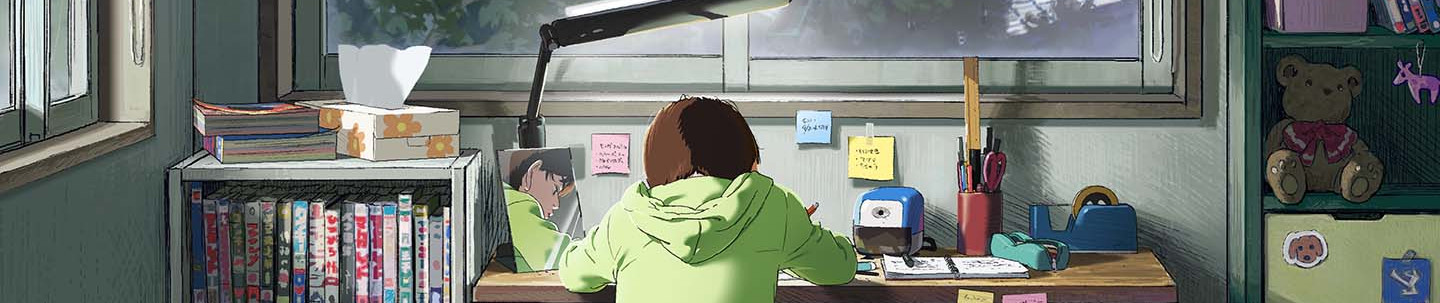
The Anime Lad
Fujino draws a four-panel manga for her elementary school newspaper and enjoys the resulting praise. Then Kyomoto, a classmate who stays home, begins contributing strips with startling draftsmanship. Their pages create a silent comparison. LOOK BACK observes artistic pride with the calm severity of a sharpened pencil.
Super Eyepatch Fox
Confident fourth grader Fujino draws manga for the school paper until the reclusive Kyomoto submits work beside hers. Comparison turns into practice, and the rivalry exists entirely on the printed page. The film watches bent backs, inked pages, and the private labor behind a small strip.
Gigguku
LOOK BACK understands that seeing someone else's better drawing can inspire awe and immediate personal crisis. Fujino's rivalry with the absent Kyomoto begins entirely on paper, through tiny school-newspaper panels. From there, the film makes desks, sketchbooks, and weather feel charged with creative effort. It is short, exact, and animated with astonishing human weight.
Father's Basement
The premise sounds almost too slight for a feature. A confident child cartoonist sees work from a reclusive classmate and realizes her own skill has limits. That simplicity is the strength. Studio Durian tracks the physical cost of drawing through posture, repetition, and pages accumulating on the floor, without turning creativity into a magical personality trait.