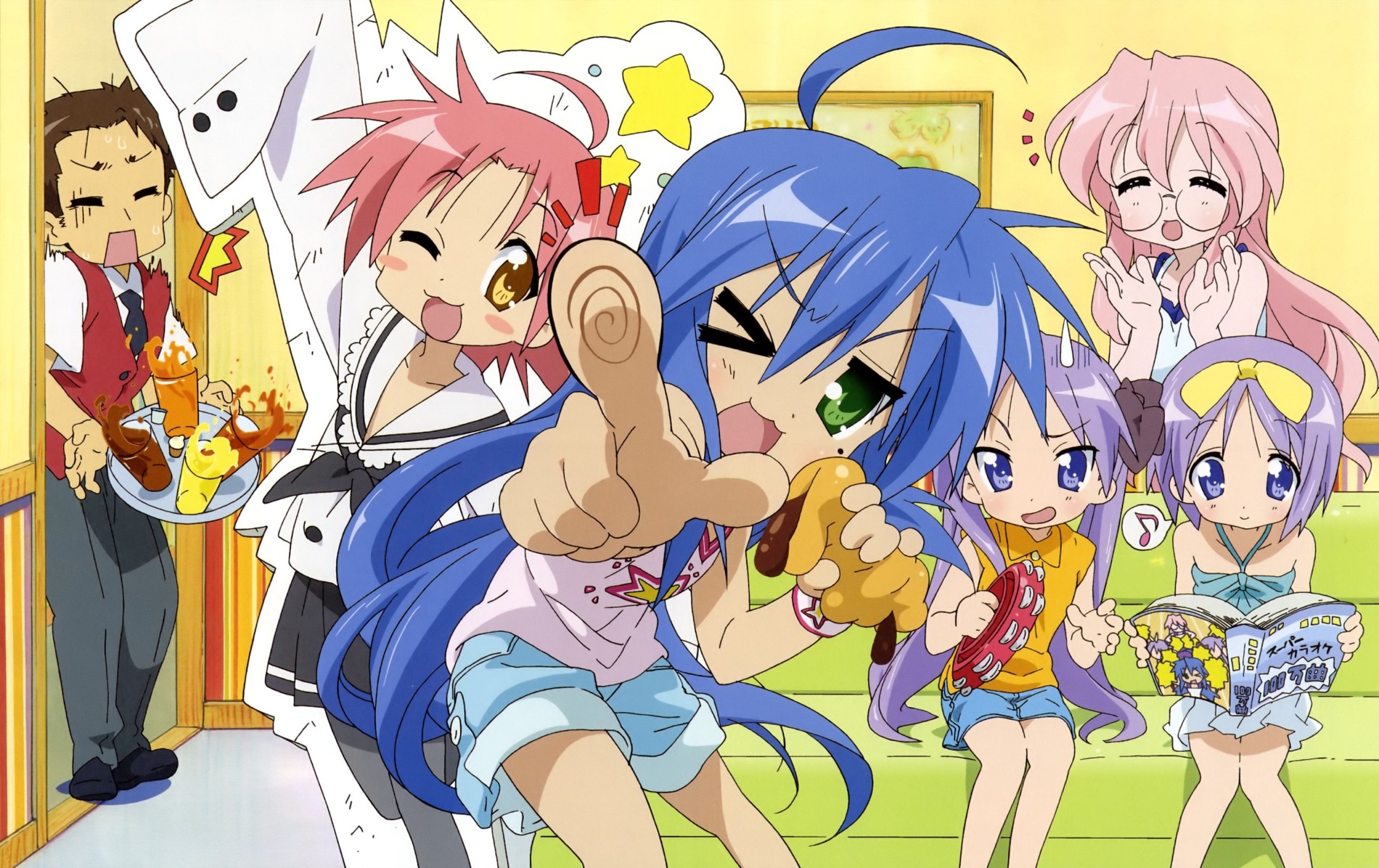
The Anime Lad
Konata Izumi would rather play games or read manga than complete athletic obligations efficiently. Her friends bring different tolerances for this behavior. Most episodes turn school routines and food questions into extended conversational disputes where the subject matters less than everyone's rhythm. Civilization continues despite a prolonged investigation into which end of a pastry should be eaten first.
Super Eyepatch Fox
Konata is an athletic student who spends her effort avoiding clubs and feeding her hobbies. Around her, Kagami and their friends debate school life with exacting seriousness. The show favors pauses and conversational detours over conventional plots. Otaku references supply one layer, but personality clashes make even lunch-table questions work without a glossary.
Gigguku
Lucky Star understands that friends can spend an absurd amount of time on a question nobody else would preserve for ten seconds! Konata keeps dragging games and anime into the conversation, Kagami keeps trying to restore basic standards, and the pauses are weapons. It is incredibly specific about mid-2000s fandom while still capturing the timeless joy of refusing to let a pointless debate die.
Father's Basement
The show can feel like a sealed archive of 2007 references, and newcomers will miss some of its easiest signals. Fortunately, the actual comic structure is sturdier. Konata provokes until mundane conversation expands into the joke, while Kagami resists. Kyoto Animation's attention to gestures keeps scenes alive even when the topic is food packaging or unfinished homework.